In the intense Australian climate, what looks like a simple freckle is often a complex biological response hidden deep beneath the surface. You might find that your bathroom cabinet is full of "brightening" serums that haven't lived up to their promises, leaving you unsure if you're managing sun damage, melasma, or post-inflammatory hyperpigmentation. Identifying the specific nature of these marks is the essential first step toward a more professional and structured approach to skin health.
It's understandable to feel frustrated when generic products fail to address the unique characteristics of your skin. This guide provides an informational overview of common pigmentation types and the clinical assessment process used by professionals in Australia. We'll explore the biological triggers of different spots, the role of professional skincare ingredients, and what you can expect during an Advanced Skin Analysis at a clinical facility.
Key Takeaways
- Learn how biological triggers lead to melanin overproduction and the development of hyperpigmentation hyperpigmentation across different skin layers.
- Identify the specific characteristics that distinguish common sun spots from other types of skin discolouration through professional clinical categorisation.
- Understand why an Advanced Skin Analysis is a critical first step in determining the depth and nature of pigment before selecting a management plan.
- Gain insight into professional modalities such as Microneedling (collagen-induction therapy) and chemical peels used in a clinical environment.
- Discover the clinical consultation process at Pumped Clinic in Lambton, focusing on a sophisticated and tailored approach to skin health.
What is Hyperpigmentation? Defining Skin Discolouration
Hyperpigmentation is a non-contagious condition characterised by darker patches or spots on the skin surface. It's a biological process where an overproduction of melanin occurs in specific areas of the skin. Melanin is the natural pigment responsible for the colour of our skin, hair, and eyes. Gaining a clear perspective on What is Hyperpigmentation? allows for a more informed approach to skin health.
For residents in coastal areas like Newcastle, the sun is a constant companion. You might notice that after periods of high UV exposure, certain areas of your face or body appear more saturated. This is often why people search for information regarding hyperpigmentation hyperpigmentation to understand the underlying mechanics of their skin's response.
To better understand this concept, watch this helpful video:
The Role of Melanocytes in the Skin
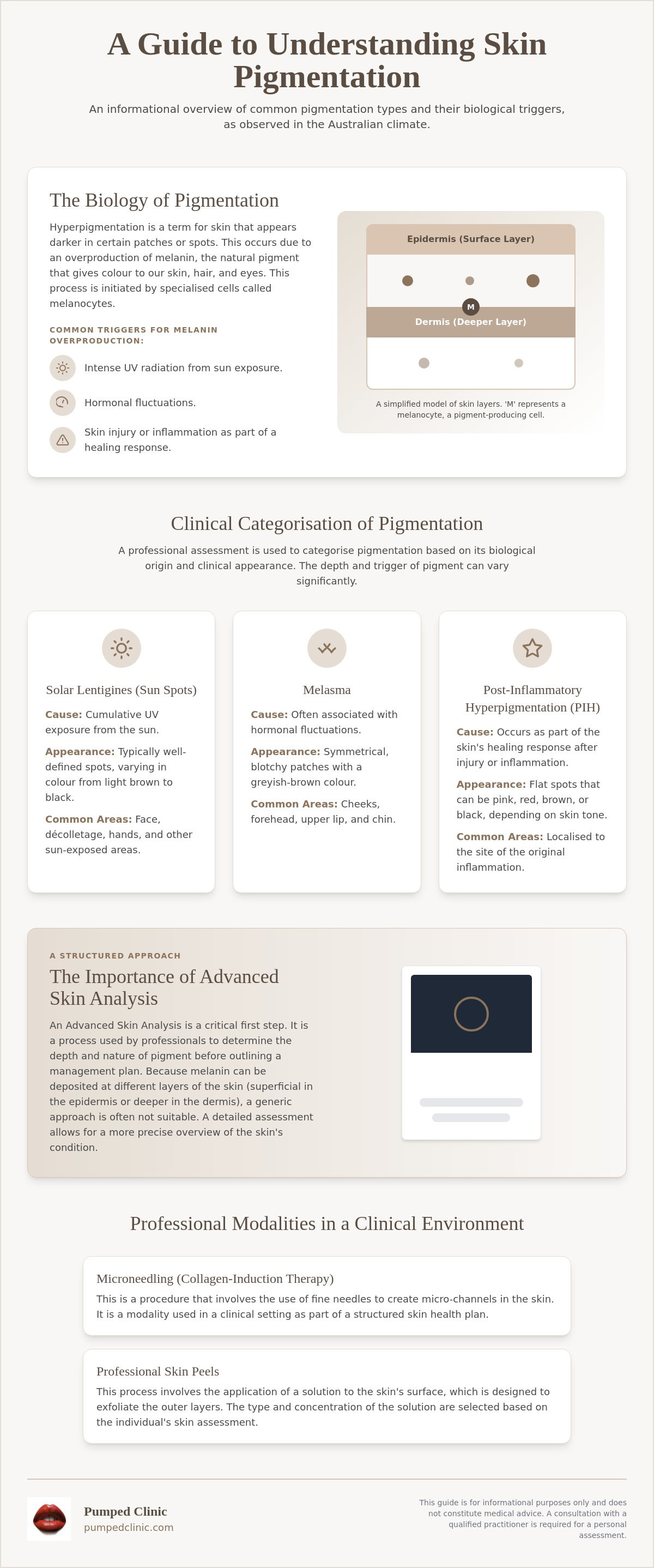
Melanocytes are specialised cells located in the bottom layer of the skin’s epidermis. Their primary function is to produce melanin to protect skin cells from UV radiation. It's a natural defence mechanism. When these cells become overactive, they deposit excess pigment in the surrounding skin cells. Understanding the nuances of hyperpigmentation hyperpigmentation requires looking past the surface to the cellular level. This process can lead to a layered appearance of pigment that requires a professional clinical assessment to identify correctly.
Common Triggers in the Australian Climate
Intense UV radiation from the sun is the most frequent catalyst for pigment changes in the Australian environment. The high UV index triggers melanocytes to work harder than usual. Other factors also play a role:
- Hormonal fluctuations: Changes during pregnancy or while taking certain medications can alter how pigment is distributed.
- Skin injury or inflammation: Localised increases in melanin can occur as part of the healing process.
- Environmental factors: Chronic exposure to elements in coastal New South Wales can influence skin activity.
This is why a tailored approach is necessary during an Advanced Skin Analysis to determine the exact origin of the discolouration. Each person's skin tells a different story, especially when shaped by the unique lifestyle and environmental factors of the Newcastle region.
At Pumped Clinic, the focus is on understanding these biological triggers in a sophisticated, clinical environment. We believe that a soft, balanced approach is key. By identifying whether the pigment is surface-level or deeper, we can provide a more precise overview of the skin's condition. This ensures that any subsequent management plan is individually prescribed to maintain a refreshed, never overdone appearance that feels both natural and harmonious.
Identifying the Different Types of Pigmentation
To the untrained eye, most dark spots on the skin appear similar. However, a professional skin assessment categorises pigmentation based on its biological origin and clinical appearance. Distinguishing between these types is essential for safe and effective skin management. In the clinical environment of Newcastle, where sun exposure is a daily reality, identifying the specific nature of hyperpigmentation hyperpigmentation is the foundation of any professional consultation.
Research into Professional treatments for hyperpigmentation highlights how different forms of discolouration respond to various clinical modalities. A "one-size-fits-all" approach is rarely appropriate because the depth and trigger of the pigment vary significantly between individuals.
Solar Lentigines and Sun Damage
Sun spots, also known as solar lentigines, are directly related to cumulative UV exposure over time. These are commonly found on areas frequently exposed to the sun, such as the face, décolletage, and hands. These spots are typically well-defined and can vary in colour from light brown to black. In Newcastle, these are often seen in clients with a history of active outdoor lifestyles. Unlike other forms of pigment, solar lentigines are purely a result of external environmental factors rather than internal biological shifts.
Melasma and Hormonal Influences
Melasma is a more complex form of pigmentation. It's characterised by larger, blotchy patches of pigment that often appear symmetrically on the forehead, cheeks, or upper lip. Unlike sun spots, melasma is frequently triggered by heat and internal hormonal changes, such as pregnancy or specific medications. Clinical observation is essential to distinguish melasma from other forms of sun damage. Because it's a chronic condition, management focus is on maintaining a stable skin environment rather than aggressive intervention.
Post-Inflammatory Hyperpigmentation (PIH)
Post-Inflammatory Hyperpigmentation (PIH) occurs following a skin trauma, such as a breakout, a burn, or a cut. It appears as flat spots of discolouration after the skin has healed from an inflammatory condition. The colour of PIH can range from pink and red to brown or black, depending on the individual's natural skin tone. Professional monitoring is required to ensure the skin barrier is supported during the pigment’s lifecycle. If the barrier is compromised, the discolouration may persist longer than expected.
Understanding these categories helps in developing a structured approach to your skin health. If you're unsure which type of discolouration you're experiencing, you can view our clinical service menu to learn more about how different conditions are assessed in a professional setting.
The Importance of an Advanced Skin Analysis
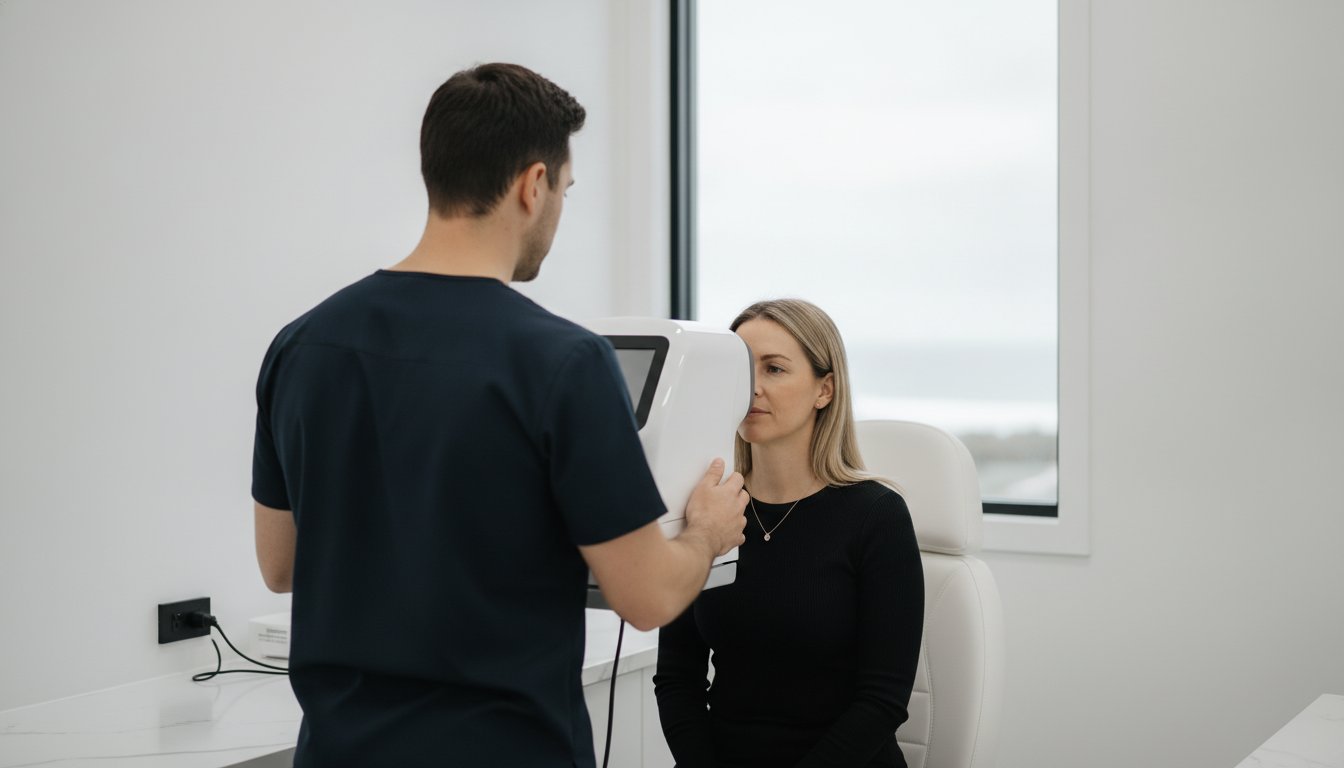
A professional consultation begins with an Advanced Skin Analysis to determine the depth of the pigment. While you might see a simple spot in the mirror, clinical imaging and magnification allow for a detailed view of the skin’s architecture. This sophisticated approach identifies exactly where the melanin is sitting within the various layers. A thorough assessment ensures the appropriate modality is selected for each individual’s skin type, which is vital for maintaining skin health in the long term.
Without this detailed view, it's difficult to distinguish between the various depths of hyperpigmentation hyperpigmentation. Understanding whether the pigment is superficial or deep is the only way to provide a precise overview of what's happening within the dermal layers. Our clinical environment in Lambton is designed to provide this level of meticulous detail, ensuring you feel both safe and special throughout the process.
Distinguishing Between Epidermal and Dermal Pigment
Epidermal pigmentation resides in the top layer of skin and is often more responsive to topical interventions. In contrast, dermal pigmentation is deeper and requires a more nuanced clinical approach. Many clients in Newcastle present with mixed pigmentation, which involves both layers and is common in cases of long-term sun exposure. Identifying these nuances is key to achieving a soft, balanced approach that respects the skin's natural biology. Surface-level pigment behaves differently than deeper pigment, and a professional can help you understand these distinctions.
What to Expect During a Clinical Consultation
The journey toward understanding your skin begins with a comprehensive review. This isn't just a quick look; it's a partner-led boutique service where Douglas and Costa ensure every detail is considered. During your consultation, you can expect:
- A review of your skin history: We discuss your sun exposure habits, lifestyle factors in the Newcastle region, and current skincare use.
- Visual examination: Using professional lighting and magnification to identify specific pigment patterns and depth.
- Tailored planning: The development of a prescribed clinical plan tailored to your specific concerns and skin type.
Managing hyperpigmentation hyperpigmentation is a journey that requires patience and professional guidance. By using advanced diagnostic tools, we remove the guesswork and provide a clear, informational pathway. This ensures that every step of your skin management is grounded in medical expertise and safety, aiming for a look that is always refreshed and never overdone.
Professional Modalities and Skincare Ingredients
While over-the-counter serums offer a basic starting point, clinical management involves a more structured and sophisticated approach. Professional skin needling (collagen-induction therapy) is a modality used to support skin renewal by working with the skin's internal biological processes. A Microneedling Session may be prescribed as part of a broader skin management plan following a detailed consultation. This clinical approach ensures that every step is tailored to your specific skin architecture and history.
When managing hyperpigmentation hyperpigmentation, the focus shifts from generic applications to targeted, professional-grade solutions. Topical ingredients are often used in conjunction with clinical procedures to maintain skin health. This dual approach allows for a more comprehensive overview of the skin’s condition, ensuring that the management plan remains soft, balanced, and harmonious with your natural features.
Microneedling (Collagen-Induction Therapy)
This procedure involves creating controlled micro-channels in the skin surface using specialised equipment. It is a non-surgical modality designed to support the skin’s natural renewal processes. Because it is a mechanical process, it does not rely on heat, which can be an important consideration for certain types of pigment triggers. Clinical add-ons can be customised based on the findings of the initial skin analysis, allowing for a prescribed approach that feels both safe and special.
Commonly Prescribed Skincare Ingredients
In a clinical setting, skincare is viewed as a functional tool to support the skin barrier. Several key ingredients are frequently discussed during a consultation:
- Tyrosinase inhibitors: These are specialised ingredients that focus on the enzyme responsible for melanin production within the melanocytes.
- Niacinamide (Vitamin B3): A versatile ingredient used to support the skin barrier and maintain a balanced skin environment.
- Retinoids: Vitamin A derivatives used in a professional capacity to facilitate skin cell turnover and support the skin's natural architecture.
The Necessity of Sun Protection
Daily application of broad-spectrum sunscreen is a non-negotiable part of pigment management, especially in the intense NSW climate. Professional skincare and clinical modalities are ineffective if the skin is not consistently protected from further UV damage. Physical protection, such as wearing wide-brimmed hats and seeking shade during peak UV hours, is vital. This commitment to protection ensures that the skin remains in a stable state, allowing the prescribed clinical plan to proceed under optimal conditions.
To explore these professional options and see how they fit into a tailored skin plan, you can view our full range of clinical modalities available at our Lambton facility.
Your Professional Skin Journey at Pumped Clinic
Pumped Clinic offers a sophisticated, partner-led approach to skin health in Lambton. We believe that every individual's skin tells a unique story, shaped by genetics, lifestyle, and environmental factors. Because of this complexity, every journey begins with a clinical consultation to ensure a "refreshed, never overdone" approach. Our focus is on clinical safety and professional standards, providing a welcoming environment where you can feel both safe and special. This meticulous attention to detail is what defines our boutique service.
A professional overview of your skin's architecture is essential before any management plan is prescribed. Understanding the nuances of hyperpigmentation hyperpigmentation requires a clinical eye and advanced diagnostic tools. By focusing on the biological triggers rather than just the surface appearance, we ensure that the information provided is accurate and relevant to your specific needs. You can view our full Treatment Menu to understand our range of non-surgical options available at our Newcastle facility.
A Tailored Approach for Newcastle Residents
Living in the Newcastle and Hunter region presents specific skin challenges, primarily due to the high UV levels and coastal lifestyle. We understand these local conditions intimately. Our plans are individually prescribed following a comprehensive clinical assessment, ensuring that the approach is harmonious with your skin type. We prioritise long-term skin health over temporary fixes. This means looking at the skin's lifecycle and how different layers respond to environmental stressors over time. It's a commitment to maintaining a soft, balanced appearance that reflects your natural beauty.
Booking Your Clinical Assessment
Consultations at Pumped Clinic are conducted by experienced professionals who prioritise clinical excellence above all else. Douglas and Costa provide a partner-led experience that removes the intimidation often felt in medical aesthetic environments. During your initial analysis, we encourage you to bring your current skincare products. This allows us to review your existing routine and provide a clear, informational overview of how specific ingredients may be interacting with your skin.
The process is designed to be transparent and educational, giving you the knowledge needed to make informed decisions about your skin. Managing hyperpigmentation hyperpigmentation is a collaborative effort between the professional and the client. When you are ready to begin, you can secure your appointment online to start your skin health journey in our Lambton clinic. We look forward to welcoming you into our space and providing a sophisticated pathway toward a radiant, confident appearance.
Commencing Your Clinical Skin Assessment
Understanding the complexities of hyperpigmentation hyperpigmentation is the first step toward a more structured approach to skin health. We've explored how identifying specific pigment types, such as solar lentigines or melasma, requires a professional clinical eye. An Advanced Skin Analysis provides the necessary depth to determine whether pigment sits in the epidermal or dermal layers, ensuring that every management plan is individually prescribed for your unique skin architecture.
At our professional Lambton-based clinic, we prioritise clinical safety and expert analysis within a sophisticated, welcoming environment. Our natural-look philosophy ensures that every skin journey is grounded in a "refreshed, never overdone" approach. We invite you to Book your Advanced Skin Analysis at Pumped Clinic to gain a clearer informational overview of your skin's current state.
Taking a proactive, clinical approach to your skin allows for a more harmonious and balanced journey. We look forward to supporting your skin health with medical expertise and a caring, artistic eye.
Frequently Asked Questions
What is the primary cause of hyperpigmentation in Australia?
Intense UV radiation is the most common trigger for pigment changes in the Australian climate. The high UV index in regions like Newcastle stimulates melanocytes to produce excess melanin as a natural defence mechanism. This biological response is the skin's way of protecting cellular DNA from solar damage, often resulting in visible discolouration.
Can hyperpigmentation be managed without surgery?
Clinical management of hyperpigmentation hyperpigmentation typically involves non-surgical, non-invasive modalities. Procedures such as professional skin peels and Microneedling (collagen-induction therapy) are frequently used in a clinical setting. These options focus on supporting the skin's natural renewal processes and maintaining a balanced skin environment without the need for invasive surgery.
What happens during a professional skin needling session?
During a Microneedling Session, a professional uses specialised equipment to create controlled micro-channels in the skin surface. This mechanical process is a non-surgical modality designed to support the skin's architecture and natural renewal cycles. It is a procedural approach that is often prescribed following a thorough clinical analysis of the skin's pigment depth.
Is a consultation required before starting a skin management plan?
A clinical consultation is a mandatory first step for any skin management plan at our Lambton facility. This allows for an Advanced Skin Analysis to determine whether the pigment sits in the epidermal or dermal layers. A prescribed plan is then tailored to the individual's specific skin history, lifestyle factors, and unique concerns.
How long does it take to see changes in skin pigment?
The timeline for noticing shifts in skin pigment depends on the depth of the melanin and the individual's biological renewal rate. Because the natural skin cell turnover cycle is approximately 28 to 45 days, professional monitoring usually occurs over several cycles. A clinical assessment provides a more accurate, informational overview of this timeline based on your specific skin type.
Is hyperpigmentation the same as melasma?
Melasma is a specific and complex type of pigmentation, but it is not the same as general sun damage. While melasma is a form of hyperpigmentation hyperpigmentation, it is often triggered by internal factors like hormonal fluctuations and heat. It typically presents as symmetrical, blotchy patches, whereas sun spots are usually well-defined and related purely to external UV exposure.
Can I have a cosmetic injectable consultation for skin concerns?
You can book a Cosmetic Injectable Consultation or a Volume Restoration Consultation to discuss various skin concerns with a professional. These sessions are purely informational and clinical in nature, providing a sophisticated environment to discuss how different non-surgical options might fit into your broader skin health journey. Every plan is individually prescribed to ensure a result that is refreshed and never overdone.
Why is daily sun protection so important for pigmentation?
Daily sun protection is essential because UV radiation is the primary catalyst for overactive melanocyte activity. Without broad-spectrum sunscreen and physical protection like hats, clinical modalities cannot function under optimal conditions. Consistent protection ensures the skin environment remains stable and prevents the further activation of pigment-producing cells during your skin journey.
Disclaimer
This article provides general educational information only and does not constitute medical advice, diagnosis or a recommendation for any treatment or therapeutic product. Information is general in nature and may not be suitable for your individual circumstances. Treatment suitability, expected outcomes, risks, benefits, alternatives and costs can only be determined following an individual consultation with an appropriately qualified health practitioner. Results vary between individuals, and no particular outcome is guaranteed. Seek independent medical advice regarding any health concern and obtain urgent medical assistance when required.