
This comprehensive guide explains the microneedling procedure, from its mechanism of action to the treatment process and aftercare protocols.
What is Microneedling and How Does It Work?
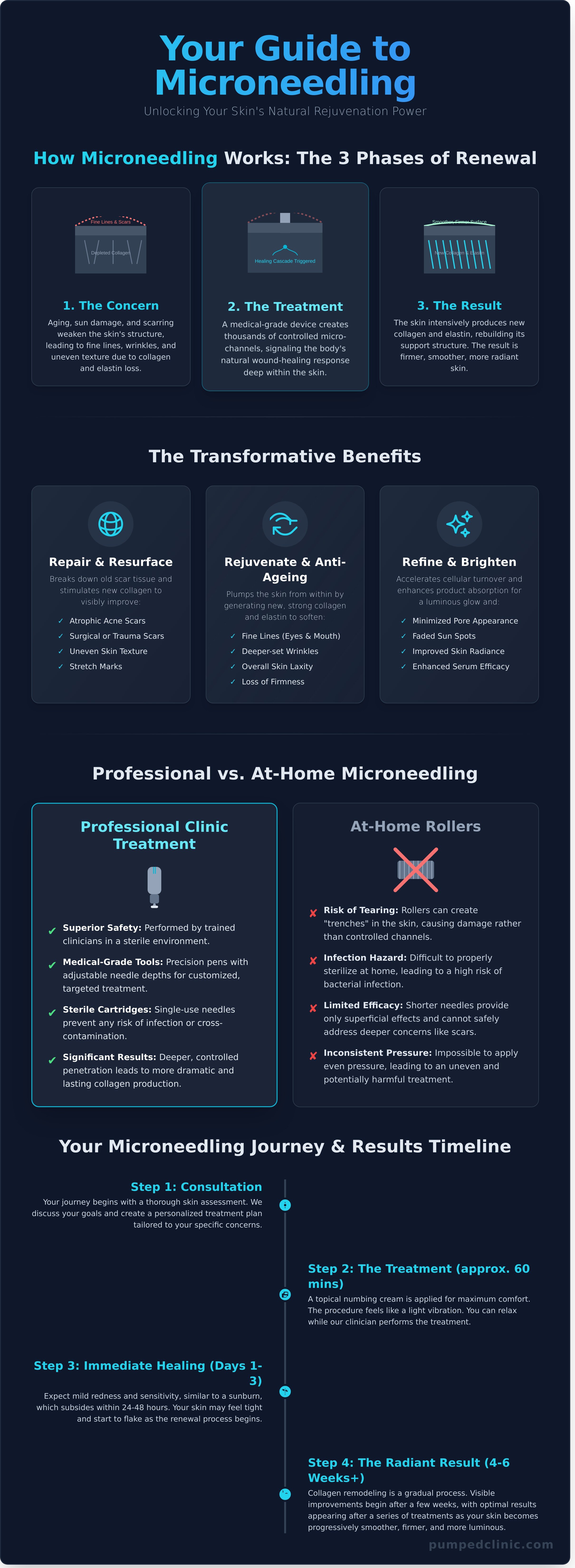
Microneedling is a clinical skin procedure, also known by the technical term Collagen Induction Therapy. The core principle involves the use of a device equipped with fine, sterile needles to create controlled micro-channels in the skin. This action is designed to initiate the body's natural wound-healing response. The stimulation from the procedure promotes the synthesis of new collagen and elastin fibres in the dermis.
The Science of the Skin's Response: Collagen and Elastin
Collagen is the primary structural protein in the skin, providing its foundational support. Elastin is a protein that allows the skin to retain its shape after stretching or contracting. The natural production of both proteins diminishes over time. The microneedling procedure is designed to mechanically stimulate the body's own process for producing new collagen and elastin.
The Professional Tools We Use
In a clinical setting, microneedling is performed using medical-grade, pen-like devices. These instruments are distinct from at-home dermal rollers. Professional devices feature adjustable needle depths, allowing the clinician to customise the treatment according to the specific area and the treatment plan. For patient safety and hygiene, we use sterile, single-use needle cartridges for every procedure.
What Does the Treatment Feel Like?
To manage sensation during the procedure, a topical anaesthetic cream is typically applied to the treatment area beforehand. Patients often describe the sensation as a light vibration or a mild scratching feeling on the skin's surface. The level of sensation can vary depending on the area being treated. Our clinicians are trained to prioritise patient comfort throughout the appointment.
Potential Applications for Microneedling
Microneedling is a procedure that can be applied to address various skin surface and textural irregularities. It is intended to affect the overall structure and function of the skin. A thorough consultation is required to determine if the procedure is appropriate for an individual's skin type, tone, and specific concerns.
Skin Texture and Scarring
The procedure can be applied to areas of the skin with textural variations. For certain types of non-keloid scars, such as atrophic acne scars, the mechanical action of the needles is used to break down existing scar tissue and stimulate a remodelling process. It can also be applied to address general skin texture and, in some cases, certain types of stretch marks.
Changes Associated with Ageing
The procedure is often used for skin changes associated with the ageing process. The induced collagen production can influence skin laxity and the appearance of fine lines and wrinkles. A course of treatments is typically required to address these concerns, as the process of collagen synthesis occurs over time.
General Skin Condition
Microneedling may be used as part of a broader treatment plan to address the appearance of enlarged pores or certain types of non-hormonal pigmentation. The micro-channels created during the procedure can also facilitate the penetration of topical products applied immediately after treatment in the clinic.
Your Microneedling Journey at Pumped Clinic
We provide a structured process for every patient, from the initial consultation through to the final follow-up. Our approach is based on developing a personalised treatment plan that aligns with clinical best practices and patient safety standards. Our goal is to ensure you are fully informed about the procedure.
CTA: To determine if this procedure is right for you, book a complimentary consultation today.
Step 1: The Personalised Consultation
Your journey begins with a thorough skin analysis and a discussion about your concerns and medical history. Our clinician will assess your skin's condition to determine your suitability for the procedure. We will then develop a proposed treatment plan, including the recommended number and frequency of sessions, and answer any questions you may have.
Step 2: Preparing for Your Treatment
Prior to your appointment, you will receive pre-treatment instructions. This may include advice to avoid using certain active skincare ingredients, such as retinoids, and to minimise sun exposure. On the day of your treatment, a topical anaesthetic will be applied. The skin is then thoroughly cleansed and prepared before the procedure begins.
Step 3: The Microneedling Procedure
A hydrating serum is applied to the skin's surface to allow the device to glide smoothly. The clinician will then move the device systematically across the designated treatment area. A typical facial procedure takes approximately 30-45 minutes to complete. Following the microneedling, a soothing, post-procedure product may be applied.
Aftercare, Recovery, and The Post-Procedure Period
Following the correct aftercare protocol is essential for managing the skin's healing process. It is important to have clear expectations about the post-treatment period. The downtime associated with microneedling is generally minimal compared to more ablative procedures.
Immediately After Treatment: What to Expect
Following the procedure, it is normal to experience mild to moderate redness, similar in appearance to a sunburn. The skin may also feel tight, warm, and sensitive to the touch. These effects are a normal part of the inflammatory process and typically subside within 24-48 hours. It is important to avoid sun exposure and makeup during this initial period.
Your Essential Aftercare Routine
We will provide you with specific aftercare instructions. This generally includes using a gentle cleanser and hydrating serums without active ingredients. The application of a high-SPF, broad-spectrum sunscreen is mandatory to protect the skin. We also advise avoiding strenuous exercise, saunas, and swimming for at least 48 hours post-treatment.
The Skin's Response Cycle Post-Treatment
While some initial changes may be noticeable as the initial inflammation subsides, the primary mechanism of the treatment—collagen synthesis—occurs over time. The full physiological response and new collagen deposition typically take place over the 4-6 weeks following each session. For this reason, a series of 3-6 treatments, spaced several weeks apart, is often recommended to align with the skin's natural cycles.
Professional vs. At-Home Microneedling: Why Clinical Oversight is Important
The growing popularity of at-home microneedling devices (derma rollers and pens) requires a clear understanding of the differences between consumer-grade tools and professional, medical-grade procedures. The distinction centres on safety, procedural control, and risk management.
The Serious Risks of DIY Microneedling
At-home microneedling carries significant risks if not performed correctly. Improper sterilisation of devices can lead to skin infections. Incorrect technique, such as applying too much pressure or dragging the roller, can potentially cause micro-tears, scarring, or post-inflammatory hyperpigmentation. There is also a risk of cross-contamination or spreading existing skin conditions.
Efficacy: Needle Depth and Customisation
At-home rollers are legally restricted to very short needle lengths, which typically do not penetrate deep enough to effectively stimulate the dermis where collagen is produced. In a clinical setting, a trained practitioner can precisely adjust the needle depth to treat different areas of the face and address specific targets safely and appropriately.
The Professional Advantage: Safety and Protocol
A clinical procedure is performed in a sterile environment using single-use needle cartridges to eliminate the risk of cross-contamination. Clinicians are trained in skin anatomy, physiology, and sterile techniques. This professional oversight ensures the procedure is performed correctly and that any adverse reactions can be managed appropriately, prioritising your health and safety.
Frequently Asked Questions
Does microneedling hurt? A topical anaesthetic cream is applied before the procedure to minimise discomfort. Most patients report feeling a vibrating or light scratching sensation. Our clinicians constantly monitor your comfort level throughout the treatment.
How many microneedling sessions will I need? The number of recommended sessions depends on your individual skin condition and the treatment plan developed during your consultation. Typically, a course of 3-6 sessions spaced 4-6 weeks apart is suggested.
What is the cost of a microneedling treatment in Charlestown? The cost of treatment varies based on the individual treatment plan. A detailed quote is provided during your initial, complimentary consultation after a full assessment of your skin has been completed.
Who is not a suitable candidate for microneedling? Microneedling is not suitable for individuals with certain conditions, including active acne, skin infections (like herpes simplex), keloid scarring tendencies, or certain skin diseases like psoriasis or eczema. A full medical history is taken during the consultation to ensure your suitability.
Can microneedling be combined with other treatments? Microneedling can be part of a larger treatment plan that may include other modalities. The suitability and timing of combining treatments must be discussed with your clinician to ensure a safe and appropriate protocol.
Is the procedure's effect on the skin permanent? The procedure is designed to stimulate new collagen synthesis. However, the skin's natural ageing process and the influence of environmental factors continue. Your clinician may discuss a maintenance plan based on your individual factors and goals.
Book Your Personalised Skin Consultation at Pumped Clinic
- Treatment performed by highly trained cosmetic clinicians.
- We use state-of-the-art, medical-grade equipment.
- Customised plans based on a thorough clinical assessment.
Disclaimer
This article provides general educational information only and does not constitute medical advice, diagnosis or a recommendation for any treatment or therapeutic product. Information is general in nature and may not be suitable for your individual circumstances. Treatment suitability, expected outcomes, risks, benefits, alternatives and costs can only be determined following an individual consultation with an appropriately qualified health practitioner. Results vary between individuals, and no particular outcome is guaranteed. Seek independent medical advice regarding any health concern and obtain urgent medical assistance when required.